Mammas Community Breastfeeding Support
  • About us
    • Contact us
    • DONATE
    • Training
    • hospital peer support
    • Blog
    • Privacy Policy
    • Our policies and procedures
  • Breastfeeding Support
    • Breast pump loan service
    • Breastfeeding Positioning and Attachment
  • Groups & Courses
    • Antenatal
    • Baby Courses
    • Toddler Courses
    • Drop-In Groups
    • Baby & Me
    • Emotional Health & Wellbeing
  • For Professionals
  • Resources
    • Why Breastfeed?
    • Antenatal and early days
    • Breastfeeding your New Baby
    • Breastfeeding older babies and children
    • Ramadan and Breastfeeding
    • Grandparents
    • Starting Solid Foods
    • Cloth Nappies
    • Links
    • Peer Supporter Resources
    • Hospital Peer Supporter Resources
  • Projects & campaigns
    • Safe Milk for every baby
    • APPG Infant Feeding
    • Baby Project
    • Baby Friendly Leicester
    • The Chronicles of Breastfeeding
  • Home

My Struggles with Breastfeeding

3/25/2021

2 Comments

 
You would think Breastfeeding would just happen as natural as it is – you would think it would just naturally work – Just put baby on the breast and the baby starts drinking to its full. Well that’s what I thought...
Picture


Until I came to breastfeed my first baby boy. It was tough and challenging.  We didn’t establish Breastfeeding and decided to “quit” after 3 months of combination feeding. That’s why I was even more determined the second time around. Only to find hurdles again…

This is an attempt to help me accept and get some sort of “closure” on why breastfeeding didn’t work for me, but also hopefully to help others on their journey. Some of the challenges we faced (looking back these now seem straightforward and as though I should have sailed through them, but at the time it was a struggle):

* Baby kept on falling asleep. Not just light sleep sometimes but literally every feed would be a struggle.  It felt as though he was in a deep sleep but as soon as I put him down he would wake and start crying as though he was starving. “Tickly his toes”, Blow lightly on his face”, “Leave him in a vest as he may be getting too warm and comfy”, “Lay him on his back” were some of the things that kept propping up when I read about it however having to tackle with this at every feed and over and over was exhausting.

*Baby lost more than the average weight and lost some more the following two visits from the Health Visitor. He wasn’t pooing. Although I was getting plenty of wet nappies.  We were told that if baby did not put on weight by the next visit (in 48 hours) he would be admitted into hospital.  With the Covid situation the thought of going back to hospital with a new born was daunting. Hence, we were under pressure and had to resort to the bottle. We were advised we needed to give 50ml at every feed and I sure was not producing that much from expressing the milk so formula it was! I knew from the first time around that this was a bad decision however at that time it felt like baby’s health Vs my determination to continue Exclusively Breast Feeding. (We tried cup feeding but struggled to get baby to drink) Expressing – Keeping up with the Expressing to compensate for the formula/bottle feeds was hard work. Also, the advice was every time you breast feed express before and after to empty the breast. Or as much as you can. With a demanding toddler, a baby to comfort and limited support in the lockdown we found this tough. Although I tried ‘power pumping’, pumping one-two times during the night after attempting to breastfeed and various times during the day. Compressions - Again this was at every feed. I did feel as though this helped at times.

*Tongue Tie - After seeing that baby was latching on well and it seemed as though he was drinking well, but of course this wasn’t seeming to work, I was referred to the Lactation consultant who confirmed that baby was borderline tongue tie and didn’t recommend division as it was so.  However, after much consideration we decided to go with our instincts and arranged the division with a private practitioner when baby was 4 weeks new.  (We felt as though he had the various symptoms such as baby taking in air and being uncomfortable, clicking sounds, sleeping a lot) Desperate to make it work we went with it.

Baby 4 weeks new - By this time feeding was going okay - we had a plan that we agreed with the consultant. Breast feed and when not satisfied top up with expressed or formula milk. (I never managed to top up with all expressed milk). We found we were topping up at most feeds.

Baby 5 weeks new - Baby’s feeding went the opposite way. He just did not want to feed at the breast. He would retaliate and even bottle feeds were taking a while. At this point I reached out to my health visitor who referred me to the infant feeding team.

Baby 6 weeks new – The Infant Feeding Lead came over when baby turned exactly 6 weeks. And it was such a relief that she could visit given the Covid situation. (This was an absolute help). Advise was even though baby is rejecting keep calm and keep trying. We arranged a new plan. As baby was fussy with feeds now might be a good time to drop the bottles and just offer two bottles a day (morning and evening) the rest to breastfeed.  To my surprise this seemed to work fine for 2-3 days.  I also got to experience the amazing feeling of seeing baby content at one or two feeds without having to top up. Only to find that baby went to completely rejecting the breast screaming and just not having it after that. At this point the bottles came in fast and I kind of said it’s not happening as it was becoming mentally and physically exhausting.  To add to this the trauma of my previous unsuccessful experience of breastfeeding. I persevered (I can do this I’m not giving up I thought) and decided to just offer breast and not bottle but him being so unhappy, screaming and hungry took over.

Baby 8 weeks new – My husband who was amazingly supportive of the whole struggle at this point gave me the final nudge and we decided that was it.  He saw this was having an impact on me and I was an emotional Wreck.  Also, I felt as though I was neglecting my toddler and at 8 weeks, we should have got this right? So, we did what we felt was best for our family.

On reflection having known the below may have helped me continue breastfeeding:

1. Babies are and will be demanding in the first few weeks.  They will be ‘needy’.  If it’s not constant breastfeeding issues it will be something else. Winding issues, gastric, unsettled baby or baby just wants to be with you. Enjoy it. We thought baby was unsettled as he wasn’t getting enough but now that we’re bottle feeding, we still sometimes get the unsettled days.  He bobs on and off the bottle on certain days too as he did with Breastfeeding. So;
2. Having confidence in yourself is key. Knowing it will be okay and it will work out.  For instance, I assumed he just didn’t want the breast as he was used to the bottle but rejecting the breast might be due to other reasons such as blocked nose. (FYI he also does this with the bottle feeds)
3. It’s a struggle for others too.  You’re not the only one. The seemingly endless cluster feeds for instance, is it going to be like this every few weeks? Will my baby need to build up his supply more often as he’s a big baby? Just do it and take each feed as it comes. However far you get is a bonus
4. Go with your own instincts. My instincts said not to top up with bottle at every feed.
5. Don’t worry about the ‘what if’s’. TAKE EACH FEED AS IT COMES, BE PRESENT AND ENJOY IT rather than worrying about how long this will go on for, what if it doesn’t work out, is baby getting enough… I was more worried about not being able to do it rather than just doing it! 
6. Personality plays a big part. RELAX and think POSITIVE know that it will work, and it is working. Be easy on yourself. Given the anxious person I am it was tough.

Some unknowns…
1. Midwife said that her mums that had big babies tend to struggle she didn’t know why? Is it true?
2.
Had I not given us enough time to cluster feed. He was on me most the time for nearly 3 weeks. I’m sure I used to feed him every hour if not more and some days he was glued to me. Is that normal? 
3. People say their baby feeds every 2 hours how come mine wouldn’t go more than an hour? And why did I not see my baby content. He was either on me drinking /sleeping or crying for more. Was he too busy trying to make the right supply for himself or was it that I didn’t have the right amount and that’s why he wasn’t happy? 
4. Maybe if I had given it another week or two, we would have been better at it?

I still think about it every day longing for breastfeeding to have worked for us. How beautiful it would have been. And how if only I could provide the milk for baby when he wanted without worrying about the temperature of milk, or he’s just had a feed he can’t have another until at least three hours.  Not knowing ‘WHY it didn’t work out’ is the hardest. It worked for other mums why not me? However, I know that I need to accept that I tried my best for our baby, and we decided to do what’s best for our family.

Looking at the bright side I still enjoy the closeness with my baby, we have the skin to skin and lots of cuddles.   

2 Comments

Mothers tell their breastfeeding stories ...

1/4/2020

1 Comment

 
Raissa and Idrees' story -
Weaning from the breast at two years

Picture
Having gone through a loss at 20 weeks gestation in my first pregnancy, when I got pregnant with Idrees, my main goal was to give birth to a healthy baby. While pregnant with Idrees, I knew I wanted to breastfeed and was made aware of the struggles that could come with it, so after birth I gave myself small goals: 
Getting the right latch....
1 week...
1 month...
3 months...
5 months...
6 months...And so on...

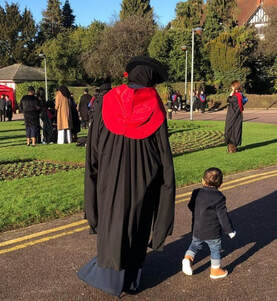
Raissa and Idrees at Raissa's Graduation

By this time, I thought “I can do this for a year...”, which I did!
At this point, I started introducing cow’s milk as he was going to nursery while I went to work. 

I was a little worried that I couldn’t carry on BF due to work but the part time schedule allowed me to carry on as I only dropped one mid morning feed. I did feel some engorgement while at work but after a few days it started to settle and my body understood that baby didnt “need” that feed. 
By 14-16 months of age he was having 2-3 feeds a day plus the night time feeds as I was co-sleeping. It was around that time that I fell pregnant and thought “Should I carry on, or stop?”
In all honesty I didn’t want to stop because I was enjoying it and it was my time with him.
So I decided to carry for as long as I could. 

From the very beginning, the maximum that I would BF would be 2 years. 
As Idrees would turn 2 at the same time as my baby was due, I made a decision that I would need to start to wean him off before baby comes and have a small gap between the two babies. 
It all started when he was around 18 months... My main issue was the night feeds as he was waking up 2-3 times for comfort feeding. I started to tackle that by slowly introducing water during the night and offer it to him at least once. He didn’t take it for the first day or two but after a few days of persistence he started to have some water at night and would go back to sleep straight away.
It started to become part of his routine, so much so that when he woke up in the morning he would ask for water first and then have a quick morning feed. 
After a week or so the same started happening at bedtime. He would ask for water first and then have his feed to sleep. 
These small signs indicated to me that water in a beaker could be the solution to wean him off BF. As he was ok with having water at night time, I decided to stop all the middle of the night feeds (not the bed time one at this point). This didn’t go well as it made him want me even more and I would sometimes wake up to 4 times in the night. 
That is when I started to introduce my husband in the picture. We started by preparing his own room and new bed for Idrees. My husband would be co sleeping with him and would carry out the night time routine with Idrees. We decided that I wouldn’t be involved so Idrees knew that I wasn’t there to give him any feeds. 
Idrees responded well to my husband taking over night time routine and allowed them to create a stronger bond. We bought a specific bottle for him for the night time milk so he would recognise it as bedtime. 
In the first night it took 20-30 mins for him to settle and understand that mummy wasn’t coming and eventually he fell asleep. 
Majority of time there wasn’t crying. Just some tossing and turning. 
For the middle of the night at this point we noticed that he would ask for water so we carried on with that as well as a spare bottle of milk in case he needed it. 
At first he would ask for both water and milk and would only wake up to drink either or both and fall back straight to sleep. 
This was huge for us as he was completely off feeds during the night and bed time. 
After 1-2 weeks, he was only on water during the night and didn’t need his milk except before bed time. 
At this point, Idrees was only feeding at nap time and occasionally he would ask for comfort feed in the late afternoon. 
I was able to drop the comfort feeding by distracting him with toys or something else. 
But the nap feed was a bit more tricky. Before starting that weaning process I wanted to make sure that weaning off night time feeds was established. 
It worked out that when I was planning to stop the nap feed, we were out and about for a few consecutive days at around his nap time. This led him to fall asleep in the car rather than breastfeeding. 
As a family, we also decided that on the weekends my husband would take over nap time too so he understood that Mummy wasn’t here for the afternoon nap.
So the same thing happened as night time routine. 
He would go to his room have his bottle and my husband would lay next to him. Once Idrees was finished with the beaker my husband would tell him that it is nap time. He would lay next to his dad and sleep. 
This worked well in the weekend. When I had to take over nap time while my husband was working, I repeated the steps and he seemed to have understood. He had his beaker with milk and once he was done, he would give it to me and lay on my chest to nap. 
I was concerned that if he was too close to me he would want to BF but he didn’t. 
I breastfed Idrees until 22 months and it was the best thing I did. 
I noticed that if I stopped any earlier than this, it wouldn’t work and neither of us was ready to stop that journey. It was an act that I thoroughly enjoyed and fortunately I didn’t have major issues apart from having mastitis a few times - looking back at it, it seems something so small in my BF journey. 
In summary, perseverance, routine and patience was essential for my positive BF and weaning experience; and knowing when it is the right time for you and your child to start that process.

​

Samia and Kulsum's story -
Establishing breastfeeding after a difficult start

Picture
When I was pregnant I knew I wanted to breastfeed and was maybe a bit naïve to think it would come naturally. We are all told it is natural so why wouldn’t this be? I also was not able to go to any antenatal classes so didn’t know any hold except from the classic cradle hold.

Anyway, baby was born and I was told she had jaundice. I was told to keep feeding her to flush it out but nobody was looking at my latch to see if she was actually feeding. Discharged and re-admitted on Day 5 as the jaundice hadn’t gone yet. Day 12/13 re-admitted again as her weight loss was 14%.

I was very persistent on breastfeeding and asked each feed to be checked as she was latching on and off again. I was able to leave the hospital in the morning as long as we agreed to a feeding plan. 30 mins on breast and top up with expressed milk and formula.

So I did that when we got home and got in touch with Mammas and La Leche League, and both came out to check the latch and help me out. I was also referred to the Infant Feeding team as the Health Visitor said if birth weight is not reached by four weeks she would have to go on formula. That weigh in was the most tense moment. She had finally reached it after 4 weeks.

Around the three weeks mark I was getting tired and doubting my supply as comments were being passed re supply but I was just trying my best to ignore. I knew I could pump and feed, but I had mixed emotions about that.

Anyway after the four week weigh in I had a few more times when I thought it wasn’t going well and I did ask Mammas for another home visit. She’s now on the 50th centile, for someone who started out not being on the graph at all, and I know I couldn’t have done it without outside help.

I would say looking back I wish I had ignored the comments of ‘Oh, she can’t be hungry again?!’, as it was thought she should go 3 hours without a feed, but breastfeeding is on demand, not by the clock.

And yes, it does get easier. Made it to one year and couldn’t be happier!

1 Comment

Blog post for World Breastfeeding Week 2017, for Tommy's website

9/7/2019

1 Comment

 
This post was initially posted in 2017 at: www.tommys.org
​
This blog was written by Sally Etheridge IBCLC as a guest blog post for Tommy's https://www.tommys.org Tommy's fund research into miscarriage, stillbirth and premature birth.
For many women who may have had a difficult previous experience, the desire to breastfeed is very strong. However, the fear of not achieving this goal can make it hard to know what to do and how to prepare.

Why breastfeed?

During pregnancy, it’s natural to focus on the labour and birth. However, enjoying feeding your baby is the foundation of your relationship together, so seeking information and thinking about your support network is actually a very important part of the preparation for birth.
You’ve probably heard that breastfeeding is ‘best for babies’ because, among other things, it: 
  • protects against disease
  • encourages optimum health and development
  • helps with bonding
  • protects mothers’ health and wellbeing too.
But you might also have heard that it can be difficult or that ‘not everyone can breastfeed’. Maybe you have friends or relatives who didn’t find it easy, or who stopped breastfeeding earlier than they intended to. Are you worried that you will be one of those mums that ‘just can’t do it’? Or, perhaps you tried with a previous baby and it didn’t work out. Please don’t be put off by the stories you hear or previous experiences because every time will be unique. 
Like any new skill, breastfeeding takes time to get the hang of. Your greatest ally in developing this new skill is patience with yourself and your baby. Keeping your baby really close, not just in the first hour after birth but also in the hours and days following their arrival, allows you to get to know them, to pick up on their cues and to let your mothering instincts kick in. Remember, your body has grown this baby, given birth to this baby and now it is ready to nurture him or her.
Attending a local antenatal breastfeeding class is great, as they are often attended by breastfeeding peer supporters, allowing you to find out what is available near you.


Breastfeeding goals
You may have learned you need an induction, a caesarean section, or be facing something else that makes you fear that breastfeeding will be more challenging.
While every mother and baby’s birth and journey is individual to them, there are things that can help everyone meet their breastfeeding goals, and ensure you and your baby enjoy a close and loving feeding relationship.


Breaking down the barriers and figuring out where to start
Talk to your midwife and ask questions
Talk to your care team so they know how important breastfeeding is to you and your baby, and explore together how any barriers may be removed and overcome. If you have questions, always ask. If you need some extra support, then say.
Check whether your local hospital has Unicef Baby Friendly accreditation. These hospitals have been assessed to make sure they have a culture where breastfeeding is encouraged and supported, and where policies and training are in place to protect and promote best practice.

‘I was so grateful to be in an environment where I was constantly helped to learn how to breastfeed. I couldn’t do it without help at first, but by the time I left I had the confidence to feed my baby at home on my own – and it has been easy ever since!’
Lily Cole on the help she received at Baby Friendly accredited St Thomas’ Hospital


Write a post-birth plan
Talk about your wishes for your baby with your (birth) partner. It can be hard to speak up for what you want when you have just had your baby so having a plan in place can really help. Your birth partner’s voice, along with the plans you have prepared, may be crucial to getting the support you want, how you want it.

Local support groups
Write down or save on your phone the numbers for breastfeeding support locally, along with the national helpline number 0300 100 0212.
Give yourself time and space
Talk to your family about your wishes too. Think about what visitors you want, and how to keep these special early days calm, private and unhurried.


Skin to skin

Skin to skin contact straight after delivery, or as soon as possible after, for at least an hour undisturbed allows you and your baby to rest together and have time to adjust.
Enjoy this time together
​
There are as many ways to enjoy nurturing your baby through feeding as there are mums and babies. Understanding the issues alongside sensitive trained help and a clear action plan, means most babies, whatever their initial challenges, can go on to breastfeed happily.
This is a special time for you and your baby, so treasure it.


1 Comment

Breastfeeding - Getting off to a good start when challenges arise

9/7/2019

1 Comment


This second instalment from lactation consultant, Sally Etheridge, helps you understand baby’s first feed and colostrum. She also offers information about feeding a baby that might have arrived a little bit early (34-37 weeks)

This post first appeared in 2017 at www.tommys.org
The first feed
Most babies will seek the breast and take their first feed in the first hour. However, some babies may take longer, especially if birth has been complex, lengthy, or involved interventions. You may need more support or trained help until things are on-track.

Colostrum
All new mothers produce colostrum, the first milk that is made from around halfway through the pregnancy. Sometimes known as the baby’s first immunisation, it is full of protective qualities that prepare and prime the baby’s delicate gut.
Produced in very small amounts to suit your new baby’s tiny tummy, with unrestricted time close to you, they will get just what they need. Lots of cuddling and skin to skin in the early days can help ensure your baby learns how to get comfortable and enjoy plenty of time grazing and suckling. This way, when your milk ‘comes in’ around the third or fourth day after the birth, the transition to more milk and fuller breasts will happen most easily.
If your baby is taking a little longer to start breastfeeding, ask for help from staff to express your colostrum early and often. The drops you express can be given to your baby by syringe, while you continue with skin to skin to allow your baby to smell and feel your skin, lick and taste your milk. Where breastfeeding has yet to take-off, frequent expressing is important for a good milk supply later.


Storing your colostrum
For parents who know they may need extra help with starting breastfeeding, antenatal collection, or ‘harvesting’ of colostrum may be the answer. Hand expressing your colostrum beforehand, collecting the droplets in a syringe and freezing it ready for your baby after the birth can really help take off the pressure. Ask your midwife what your hospital protocol is.
Visit the La Leche website for more information about antenatal collection of colostrum or download Kingston Hospital’s handy PDF guide.


Breastfeeding if baby has arrived a little earlier than expected
One group of babies who may receive less support to start breastfeeding, but may need it most, are those babies born at 34-37 weeks; the Late Preterm babies.
These babies may not need to go the NNU. They may stabilise quickly, and be discharged after a few days of observation. Yet these babies, and their parents, often need trained help and ongoing support to get breastfeeding established. They are usually small, with little mouths. They may tire easily, fall asleep after a few sucks, and so take little milk in. Their ability to sustain and coordinate sucking will take some time still to develop. Without guidance and support, parents may not be aware their baby is not feeding effectively. Others may start to give bottles of formula milk, unsure how else to make sure their baby is ‘getting enough’.
 
​
Parents can feel tremendous guilt if they are told their precious baby has lost too much weight, or needs to go back in to hospital due to jaundice, and may quickly decide breastfeeding is too stressful or difficult. Recognising the signs that a baby is getting enough milk is important for all parents. Watch your baby for any signs that they are ready to feed, to give yourself time to bring your baby close to the breast, and allow them to latch on well; get to know the signs your baby is  actively drinking, and relax together with your baby. It is natural for parents to take a great interest in their baby’s nappies! This is a great way to know if your baby is likely to be getting enough milk.
See NCT for a useful visual guide to what to look for and expect.

A wonderful resource with numerous short videos for breastfeeding parents, including breastfeeding a small or early baby, can be found at www.globalhealthmedia.org.

Why we’re celebrating World Breastfeeding Week and the theme of sustainabilityBreastfeeding is what mothers and babies do all over the world, and have done across the millennia. It is what has ensured the survival of the human race. Every single one of us is proof that breastfeeding works – without it, none of us would be here today. Right now, in every town and country, and in every corner of the globe, mothers are nurturing their baby with their milk. Breastfeeding is the most efficient food production system we know and it gives all babies an equal start in life.

1 Comment
Forward>>

    Authors

    Mammas Peer Supporters, Mothers who use our services, Directors and our trusted friends all contribute to this blog. 

    Categories

    All
    Breastfeeding Chronicles
    Breastfeeding Twins
    Early Days
    Pregnancy
    Preparing To Breastfeed
    Pumping / Expressing
    Weaning
    Why Breastfeed?

    RSS Feed

  • About us
    • Contact us
    • DONATE
    • Training
    • hospital peer support
    • Blog
    • Privacy Policy
    • Our policies and procedures
  • Breastfeeding Support
    • Breast pump loan service
    • Breastfeeding Positioning and Attachment
  • Groups & Courses
    • Antenatal
    • Baby Courses
    • Toddler Courses
    • Drop-In Groups
    • Baby & Me
    • Emotional Health & Wellbeing
  • For Professionals
  • Resources
    • Why Breastfeed?
    • Antenatal and early days
    • Breastfeeding your New Baby
    • Breastfeeding older babies and children
    • Ramadan and Breastfeeding
    • Grandparents
    • Starting Solid Foods
    • Cloth Nappies
    • Links
    • Peer Supporter Resources
    • Hospital Peer Supporter Resources
  • Projects & campaigns
    • Safe Milk for every baby
    • APPG Infant Feeding
    • Baby Project
    • Baby Friendly Leicester
    • The Chronicles of Breastfeeding
  • Home